

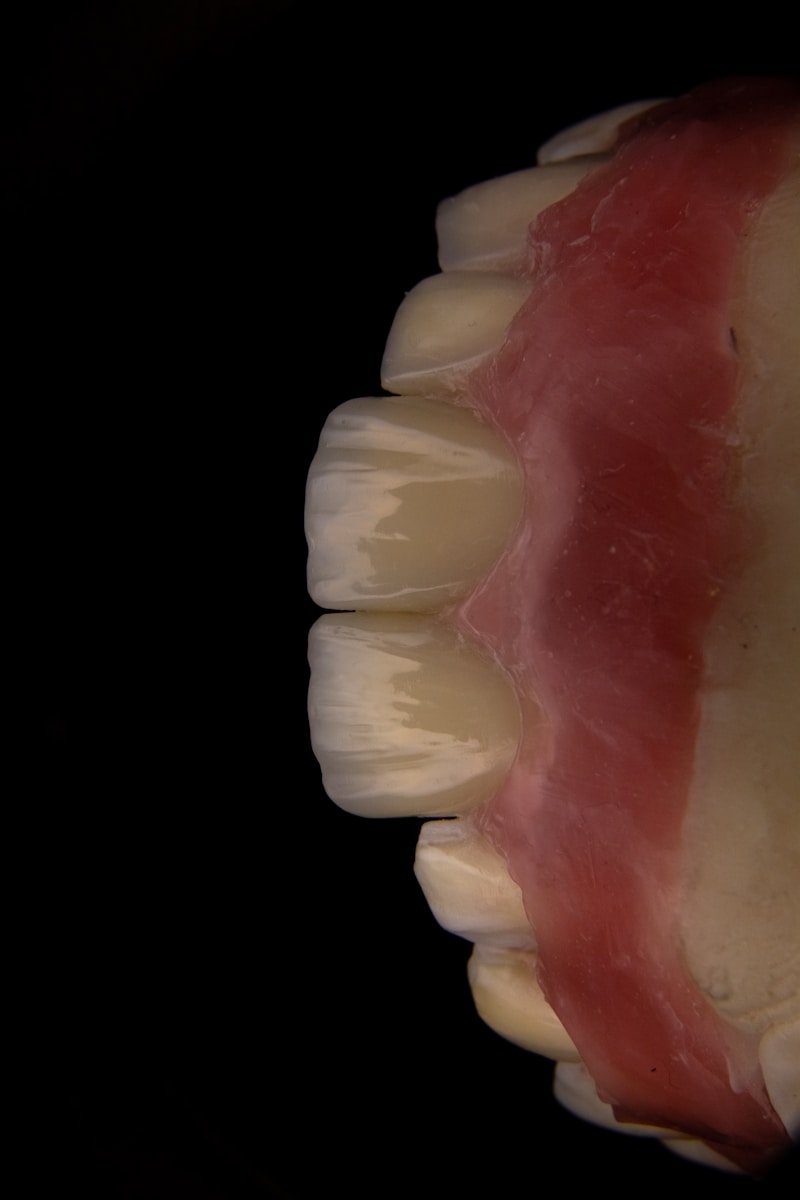
Picture a public-health nurse with a tablet that claims to name, before anyone picks up an X-ray, which children are heading for a cavity in their first adult molars. Catch the decay early, send the right kids to a dentist, spend scarce prevention money where it counts. It is a seductive pitch — and a new study put AI caries prediction to the test that most accuracy charts quietly skip: not how accurate, but accurate for whom?
The 30-Second Version
- Researchers trained three machine-learning models on U.S. national survey data to predict permanent-molar cavities in children aged 6–19, reaching about 78% AUC.
- Age, family income, parental education, insurance and sugar intake drove the predictions — a portrait of social circumstance as much as of teeth.
- The honest catch: error rates differed by race and ethnicity, and a built-in ‘fairness’ fix narrowed the gap — but, for the simplest model, only by sacrificing accuracy.
- This is population-level triage from a questionnaire, not a diagnosis, and it was never tested in a real clinic.
It sounds like the future of preventive dentistry. But the work behind the headline is more careful than the pitch. Writing in AJPM Focus (2026), Pritam Deb, Lin Li and Christina R. Scherrer built not one but three prediction models — logistic regression, random forest and XGBoost — on data from 5,710 children and adolescents in the U.S. National Health and Nutrition Examination Survey (NHANES). Their guiding question was not simply whether a machine can forecast cavities. It was whether it forecasts them equally well for every child.
The study, in one glance
The team trained and tuned the models on NHANES data from 2011–2014, then held back the separate 2015–2016 cycle as a tougher ‘can it handle new people?’ test than a random split. The target was blunt: does a child have decay — decayed, missing or filled — in at least one of their eight permanent molars? About 37% did. The inputs were sixteen everyday variables: age, income, parental education, insurance, dental-visit history, BMI, screen time, and sugar and carbohydrate intake — the stuff of a questionnaire, not a scanner. Discrimination was measured with the AUC.
Where AI caries prediction genuinely delivers
All three models landed in the same range — AUC between 77.1% and 78.5%, accuracy around 68–69% — which tells you the choice of algorithm barely mattered. More interesting is what the models leaned on. A SHAP analysis (a method for ranking how much each input sways a prediction) put age first in every model: as children grow, more molars erupt and spend longer exposed to decay. After age came household education, the income-to-poverty ratio and insurance status, then sugar and carbohydrate intake, money spent eating out and how recently the child had seen a dentist. In other words, the model was reading a child’s social circumstances at least as much as the child’s mouth — and it did so more accurately than earlier models built on smaller, local samples, which mostly scored below 75%. That is the same pattern Decadentry has seen when AI reads cavities straight off an image: impressive headline numbers that deserve a second look.
But accurate for which children?
Here is where the study earns its real title, ‘Beyond Accuracy.’ The authors treated race and ethnicity as a ‘protected attribute’ and asked whether the models made their errors evenly across groups. The reassuring half: there were no statistically significant gaps in the true-positive rate — the models caught real cases about equally across groups. The uncomfortable half: the false-positive rate differed significantly. Compared with every other group combined, non-Hispanic White children — the largest group in the data — were flagged as at-risk more often than the data justified. A model can look even-handed on its headline accuracy and still hand out its mistakes unevenly.
⚠ A fair-looking average can hide an unfair split
Overall accuracy near 78% says nothing about whose cavities get missed and whose get over-called. The study’s fairness test found the error rates diverged by race and ethnicity even while the average looked fine — exactly the blind spot a single accuracy score creates.
A single accuracy score is like one thermostat for a whole building: the average reads comfortable while some rooms freeze and others roast.
And the raw material has limits of its own. The models see only what NHANES records, so fluoride exposure, genetics and long-term diet are simply absent. The data is a 2011–2016 vintage, the outcome is modestly imbalanced (handled with class weights rather than resampling), and the ‘test’ is a later survey cycle, not a genuinely external population or a live clinic. This is a well-built proof of concept, not a finished tool.
Can a fairness ‘fix’ actually fix it?
To close the gap, the team applied an ‘equalized-odds’ constraint — a technique that pushes a model to equalize its error rates across groups during training. It worked, up to a point. The largest false-positive-rate gap shrank from 0.142 to 0.121 for XGBoost, from 0.117 to 0.064 for logistic regression, and from 0.143 to 0.110 for random forest; the gaps that had been statistically significant for the tree models (p = 0.008 and p = 0.006) became non-significant afterward (p = 0.60 and p = 0.80). But fairness was not free. Forcing the simplest model, logistic regression, to be even-handed collapsed its AUC from 78.5% to 65.5% and gutted its recall, because a single-boundary model can only obey the constraint by predicting far fewer positives. The tree-based models held near 77%. The authors’ verdict is refreshingly plain: if fairness is paramount, logistic regression; if you want balanced accuracy with a moderate fairness gain, choose a tree.
Who does a cavity-predictor actually serve?
Look again at the top predictors — income, education, insurance, access to care — and the equity stakes come into focus. These are the fingerprints of disadvantage, and a model built on them can cut two ways. Aimed well, it could steer sealants, fluoride and dental visits toward the children most likely to need them. Aimed carelessly, a model whose errors fall unevenly could quietly entrench the very disparities it was meant to shrink — over-referring some groups, under-serving others, all under a veneer of objective accuracy. The authors are candid that machine learning cannot, by itself, overcome structural, behavioral or access barriers; a risk score is one instrument in a broader equity strategy that still needs school programs and clinician training, part of the wider ethics, education and patient-care conversation around dental AI.
What this means for you
If you’re a parent
A questionnaire-based risk score is a nudge to book a check-up, never a verdict — only a dental exam can confirm decay. If a school or clinic uses such a tool, it is fair to ask whether it was tested for even-handedness across different groups of children.
If you’re a clinician or policymaker
Judge any risk model on both accuracy and subgroup error rates, and set its threshold for the job — higher sensitivity to avoid missed prevention, higher specificity when follow-up capacity is tight. The fairness–accuracy trade-off is a choice you are making, whether or not you look at it.
The bottom line
The most valuable thing this study did was not hitting 78% — plenty of models manage that. It was refusing to stop at the average. An AI that predicts cavities is an assistant for aiming prevention, not an oracle that decides which children count. The honest version of ‘it works’ is always ‘it works — for whom, and at what cost to everyone else?’
Frequently asked questions
What did this AI caries prediction study actually measure?
Whether three machine-learning models could predict, from sixteen survey variables, if a U.S. child aged 6–19 had decay in at least one permanent molar. The models were trained on NHANES 2011–2014 data and tested on the 2015–2016 cycle. About 37.3% of the 5,710 children had such decay, and the best model reached an AUC of 78.5%.
Was the AI biased by race or ethnicity?
Its error rates differed. There were no significant gaps in catching true cases (the true-positive rate), but the false-positive rate differed significantly across race and ethnicity — non-Hispanic White children were over-flagged — which the authors describe as an ‘equalized-odds’ fairness violation.
Did the fairness fix solve the problem?
Only partly. An equalized-odds constraint shrank the false-positive-rate gaps and made the significant ones non-significant, but forcing fairness on the simplest model (logistic regression) cut its AUC sharply, from 78.5% to 65.5%. The tree-based models kept their accuracy near 77%, so fairness and accuracy traded off.
Can this predict my child’s cavities today?
No. It is a research model built on national survey data, never tested in a clinic, with no fluoride or genetic information and no fully external validation. It is a population-level triage idea for aiming prevention, not a diagnosis.
Why use survey answers instead of an X-ray?
The goal was different. Rather than reading a tooth, the model tries to flag which children to prioritize for prevention before problems appear, using data a public-health program already collects. Confirming decay still needs a dental examination.
Source & author credit
This article interprets, and does not reproduce, the following peer-reviewed study. All figures are the authors’ original findings.
Deb P, Li L, Scherrer CR. Beyond Accuracy: Machine Learning Models for Predicting the Presence of Permanent Molar Caries in U.S. Children and Adolescents With Fairness Consideration. AJPM Focus. 2026;5(6):100506. DOI: 10.1016/j.focus.2026.100506
ORCID — Lin Li: 0000-0002-3917-4169
Published under a Creative Commons CC BY-NC-ND 4.0 licence. Reviewed against the primary source under Decadentry’s editorial standards. Decadentry is an independent educational publication and is not affiliated with the study’s authors.

Leave a Reply