
Run your tongue across the chewing surfaces of your back teeth. The peaks and grooves you were born with are being quietly sanded down — by grinding, by acidic drinks, by decades of ordinary chewing. It happens so slowly that most people, and plenty of dentists, only notice once a tooth looks visibly short or a filling keeps popping out. Catching that slide early, while a cusp is merely dulled rather than flattened, is exactly the judgement human eyes are worst at — and the one a new AI tooth wear grading system is trying to automate.
The 30-Second Version
- A new study trained a 3D “point cloud” model to perform AI tooth wear grading straight from intraoral scans, reaching 73.7% overall accuracy across three grades.
- It was reliable on obvious, moderate wear — 91.4% precision and an AUC of 0.92 — and agreed strongly with dentists overall (weighted kappa 0.827).
- But mild, early wear — the grade where intervention actually changes the outcome — was its weakest link: 61.6% precision and an F1-score of just 0.65.
- It is a single-centre proof of concept, with no severe-wear category and no true multicentre test. A promising prototype, not a product.
It sounds like the fix for a famously subjective job: a scanner that grades wear the same way every time, without the eye-of-the-beholder variation that plagues human examiners. But the details decide whether that promise survives contact with a real mouth. Writing in BMC Oral Health, Huiting Deng and colleagues at Hangzhou Medical College and Ningbo Stomatology Hospital built a point cloud deep-learning model that reads the 3D shape of each tooth from an intraoral scan and sorts it into no, mild or moderate wear — and then asked the honest question: where does it break?
The study, in one glance
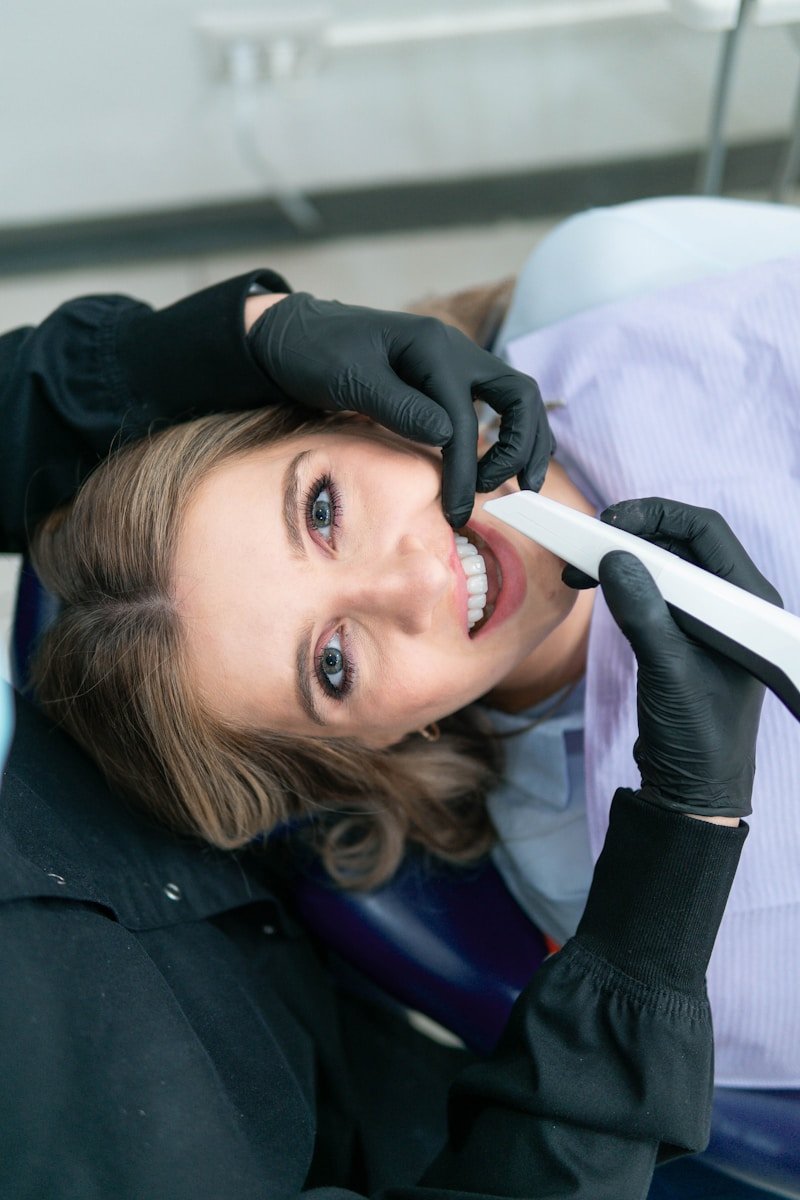
The team retrospectively pulled intraoral scans from 200 patients — 4,556 individual teeth — taken before orthodontic treatment. Three calibrated dentists graded every tooth using the 2001 Lobbezoo tooth wear scale, keeping only teeth where at least two agreed. Severe and extremely severe wear were too rare to learn from (just 48 and 2 teeth), so the model was trained on three grades only. A point-cloud network called Point-MAE, pre-trained to reconstruct tooth surfaces and then fine-tuned to classify them, was tested on a balanced set of 300 teeth — 100 each of no, mild and moderate wear.
What AI tooth wear grading gets right
Start with the genuinely impressive part. Tooth wear grading is one of the most subjective calls in dentistry — the field’s own indices disagree, and human examiners reach only moderate agreement — so an objective, repeatable second opinion fits a fast-growing push across AI dental diagnostics and imaging. On obvious moderate wear, the model delivered: 91.4% precision, 96.5% specificity and an AUC of 0.92. When it called a tooth moderately worn, it was almost always right. Across a separate 50-patient set of 1,363 teeth, its grades matched the dentists’ at a weighted kappa of 0.827 — strong agreement, and the three annotating dentists agreed among themselves at only a slightly higher Fleiss’ kappa of 0.886. The machine is closing in on the humans it learns from.
So why does it stumble on early wear?
Because the easy cases and the important cases are not the same cases. The model’s weakest grade was mild wear — and mild wear is precisely the stage where catching the problem changes what happens next. Here the numbers sag: 61.6% precision, a recall of 69%, an F1-score of 0.65 and an area under the precision-recall curve of just 0.62. In plain terms, roughly two in five teeth it labelled “mild” were actually something else. The authors are candid about why: early enamel wear involves tiny geometric changes, and a slightly dulled cusp looks a lot like a healthy one to a model that reads pure 3D shape.
⚠ The weakness sits where the stakes are highest
A screen that is sharpest on advanced damage and blurriest on early damage inverts what a screening tool is for. By the time wear is unmistakably moderate, a human will usually have seen it too. The value of an early-warning system is early warning — and that is the one grade this model is least confident about.
It is a smoke alarm that goes off reliably once the room is full of smoke, and hesitates at the first wisp.
The evidence underneath is thin in the ways that matter. This is a single-centre, retrospective study drawn from one hospital’s scans between 2019 and 2023, on one brand of scanner. Severe and extremely severe wear were dropped for lack of examples, so the model cannot grade the cases that most need restorative planning. And the headline “external validation” was a fresh batch of 50 patients from the same institution — reassuring, but not the multicentre, multi-scanner test the authors themselves say is still only planned.
Can you trust a grade you can’t see inside?
To their credit, the team does not oversell. They state plainly that the strong agreement “should not be interpreted as evidence of readiness for autonomous clinical diagnosis,” and frame the system as decision support. An early look under the hood — an occlusion sensitivity analysis — suggests the model keys on the occlusal tables and incisal edges where real wear facets form, rather than some irrelevant quirk of the scans. That transparency separates a trustworthy prototype from a black box with a good score.
Who gets this, and who gets left out?
A tooth wear grading model that runs on intraoral scans only helps practices that own an intraoral scanner — and those remain a minority of clinics, concentrated in well-resourced, often urban settings. The training population was a single Chinese cohort aged 9 to 58, scanned on one device. Whether the model holds up on a different scanner, a different population, or the full span of a wear scale it was never shown is an open question, not a safe assumption — the same generalisability gap we met when we asked whether a photo could replace the orthodontic mould. Objectivity is only fair if everyone can reach it.
What this means for you
If you’re a patient
If your dentist uses a scanner that flags wear, treat it as a prompt to talk about grinding, diet and acid exposure — not a verdict. The tool is good at confirming wear you can probably already feel, and least certain about the subtle early changes worth acting on. Your clinician’s eyes and questions still do the real work.
If you’re a clinician
As a standardising second reader for longitudinal monitoring, an objective wear grade is genuinely useful — especially for tracking progression between visits. But the 61.6% precision on mild wear means you cannot lean on it for the early calls that drive prevention, and it has nothing to say about severe wear at all. Useful for consistency, not for the hard decisions.
The bottom line
This is a careful, honest piece of work that does something new — grading tooth wear from the raw 3D shape of a tooth — and reports exactly where it falls short. That candour is the point. An AI wear grader can be a steady, repeatable assistant for the obvious cases and the long-term chart. It is not yet an oracle for the early, ambiguous wear where a sharp clinical eye still earns its keep.
Frequently asked questions
What is AI tooth wear grading, and why does it need a computer?
Tooth wear is the slow, irreversible loss of enamel and dentin from grinding, abrasion and acid. Dentists grade its severity with visual indices, but those scores are subjective and examiners often disagree. This study trained a deep-learning model to read the 3D shape of each tooth from an intraoral scan and assign a wear grade automatically, aiming for a more consistent, repeatable assessment.
How accurate was the model?
Overall accuracy was 73.7% across three grades (no, mild and moderate wear) on a balanced 300-tooth test set. It was strongest on moderate wear (91.4% precision, AUC 0.92) and weakest on mild wear (61.6% precision, F1-score 0.65). On a separate 50-patient set, its grades agreed with dentists at a weighted kappa of 0.827.
Can it replace a dentist’s examination?
No, and the authors do not claim it can. They describe it as a decision-support tool and state it is not ready for autonomous diagnosis. It was built and tested at a single hospital on one scanner, could not grade severe wear at all, and is least reliable on the early wear that matters most for prevention.
Why is it worse at mild wear than at moderate wear?
Early enamel wear changes a tooth’s shape only slightly, so a mildly worn tooth looks much like a healthy one to a model reading pure geometry. Obvious moderate wear, by contrast, has a distinctive flattened form that is easier to recognise. Unfortunately, the mild stage is exactly where early intervention does the most good.
Is this available in clinics today?
Not as a product. It is a proof of concept. Before clinical use it would need testing across multiple centres and scanner types, a severe-wear category it currently lacks, and prospective studies measuring whether it actually helps dentists work faster or more consistently — all of which the authors describe as future work.
Source & author credit
This article interprets, and does not reproduce, the following peer-reviewed study. All figures are the authors’ original findings.
Deng H, Lei Y, Dai W, Jin C, Shi Y, Shen W, Guo J. Point cloud deep learning-based automatic grading system for tooth wear. BMC Oral Health. 2026;26:2109. DOI: 10.1186/s12903-026-09333-z
ORCID — none listed for this record in Crossref.
Every figure above is traced to the primary study, in line with our editorial standards.
Published open access under a Creative Commons Attribution-NonCommercial-NoDerivatives 4.0 International (CC BY-NC-ND 4.0) licence. Decadentry is an independent educational publication and is not affiliated with the study’s authors.

Leave a Reply